 By bizn_fun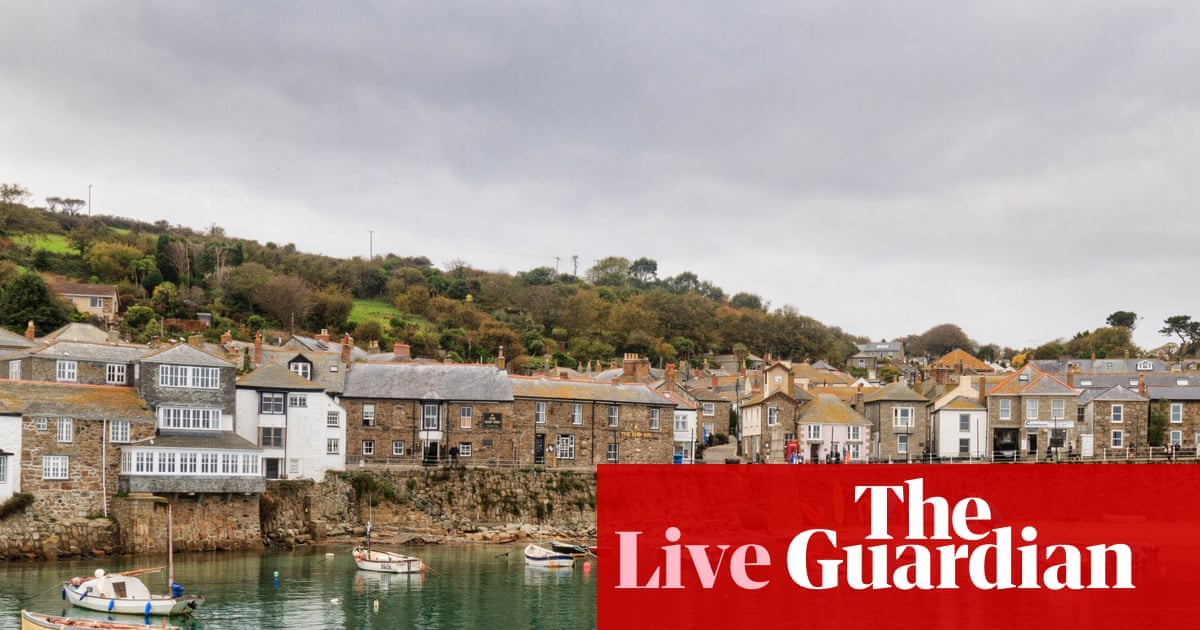
Mayors in England to get power to impose tourism tax on overnight visitors at ‘modest’ rate
Mayors in England will be allowed to introduce tourist taxes for tourists staying overnight in their areas, the government has announced.
They will be able to set their overnight levy at a “modest” rate, and the money will be used for local improvements.
Steve Reed, the housing secretary, has confirmed the move in an announcement linking it to tomorrow’s budget. Although budget decisions are supposed to be unveiled by the chancellor on the day, some of the less important ones have been pushed out in advance.
The levy will apply to people staying in places including hotels, holiday lets, bed and breakfasts, and guesthouses.
Explaining the move, the Ministry of Housing, Communities and Local Government said:
England’s mayors will be able to invest in transport, infrastructure, and the visitor economy through a new levy on overnight stays.
The fee would apply to visitors’ overnight trips, and it would be up to mayors and other local leaders to introduce a modest charge if it’s right for their area.
The move would ensure UK mayors have the same powers as their counterparts in cities like New York, Paris and Milan, where charges on short-term trips are already commonplace.
The proposal will be subject to a consultation which will end in February.
The government has not said how much the levy might be, but the Senedd has legislated for a tourism tax in Wales that will be up to £1.30 per person per night. From July next year Edinburgh will have a tourism tax set at 5%.
The move has been welcomed by many of England’s metro mayors.
Steve Rotheram, the Liverpool city region mayor, said:
For too long, cities like ours have been expected to compete on a global stage without the basic tools that other places take for granted. Cities like Barcelona and Paris raise tens of millions each year through similar schemes – money that goes straight back into improving the visitor experience and supporting the local people who keep those destinations thriving.
I’m pleased that the government has listened and acted – giving areas like ours the powers we need to support and grow our economies in a sustainable way. Our visitor economy is worth more than £6bn a year and supports over 55,000 local jobs. A modest levy is money that would stay local and be reinvested in the things that make our region stand out: our world-class culture, iconic events, vibrant public spaces and the infrastructure that ties it all together.
Key events
Streeting says worsening of children’s health shows why Labour must press on with ‘historic purpose to eliminate child poverty’
Children’s health in England has been getting worse, Wes Streeting, the health secretary, has said.
Speaking at a conference organised by King’s Fund, a health thinktank, and the children’s charity Barnardo’s, Streeting said that poor health was linked to poverty and he signalled that this would be a priority in the budget tomorrow.
Keir Starmer and Rachel Reeves have already all but confirmed that tomorrow’s budget will scrap the two-child poverty cap – widely seen as the single best measure that would reduce child poverty.
In his speech, Streeting said:
Children in England are sicker today than the generation of a decade ago – in fact, they face some of the poorest health outcomes in Europe.
Obesity in five and six year olds is at its highest level since records began – a health timebomb that leaves them at greater risk from some of the biggest killers like cancer and heart disease later in life.
The leading cause of hospital admissions amongst kids aged between five and nine is to have their rotting teeth pulled out.
And so what does it say about us, as a country, if we ignore a situation where our children are sicker, less happy, and less active than their peers around the world?
What kind of start in life are we giving our children?
And if we allow it to continue, then what kind of future are we leaving to them?
Our children will lead shorter, less healthy lives.
Our NHS will buckle under a tidal wave of chronic conditions.
Our society will become fractured, as those in work will be paying more to care for a growing number unable to work.
And our economy will suffer, because our businesses will be denied the talent the next generation could offer.
Those are all reasons to act.
But what’s more: health problems do not fall on children evenly.
Childhood obesity and tooth decay are both more common in the most deprived communities. Deprivation worsens mental health.
There’s no getting away from the stark truth that the poorest kids are in the poorest health.
And when a child is too sick for school, then the trajectory of their whole life is on the line …
As we look ahead to the budget tomorrow, it is worth remembering this: ever since Keir Hardie founded the Labour party, our historic purpose has been to eliminate child poverty, ensure no child is left behind, and provide every child with the best start in life.
Reeves’s plan to cut cash Isa limit could raise mortgage rates, say finance bosses
Rachel Reeves’s plan to slash the annual cash Isa limit by 40% could lead to higher mortgage rates and deter consumers from saving, finance bosses have said. Rupert Jones has the story.
Tories says plan to give mayors to impose overnight levy on visitors amounts to ‘tax on British holidays’
The Conservative party has criticised the decision to let mayors introduce a levy on overnight stays (see 3.29pm), calling it a “tax on British holidays”.
James Cleverly, the shadow housing secretary, said:
Hotels and B&Bs already pay VAT at 20%, corporation tax, business rates and national insurance. Both business rates and national insurance have already been hiked up by the Labour government. This is therefore yet another Labour tax on British holidays, pushing up costs for hard-pressed families, and yet another kick to British hospitality.
Local authorities can already introduce business improvement districts, as has happened in Manchester, allowing a levy to raise funds for the costs of tourism. But this is agreed by local firms through a referendum, ensuring the funds are only raised if they boost the hospitality sector.
Instead, Labour are imposing yet another new tax on local hospitality firms.
According to the Ministry of Housing, Communities and Local Government, the power to impose a tourist tax will be available to the mayors of strategic authorities (or combined authorites). These include metro mayors, but increasingly strategic authority mayors are being set up in rural areas, and so that term is now being used less.
The government has not said what a maximum overnight levy might be, but it is meant to be “modest”. The consultation will consider whether or not an upper limit should apply.
Stamer says talks on ceasefire ‘moving in postive direction’ in talks with pro-Ukraine allies
Keir Starmer said talks on a potential ceasefire in Ukraine are “moving in a positive direction” as he spoke to leaders of the war-torn nation’s allies, PA Media reports. PA says:
The prime minister led a call with leaders of the so-called “Coalition of the Willing” this afternoon after talks between Ukraine and the US in Geneva over the weekend appeared to bear fruit for a path to peace.
Addressing a virtual meeting of the coalition from the cabinet room in 10 Downing Street, Starmer said of the latest talks: “Progress was made and I welcome some of the developments that have now come forward.
“It was a chance to ensure that the draft plan fully reflects Ukraine’s interests and lays the ground for a lasting peace.”
He added that Ukraine had “proposed some constructive changes”, supported by European national security advisers.
The PM said: “I do think we are moving in a positive direction and indications today that in large part the majority of the text, Volodymyr [Zelenskyy] is indicating, can be accepted.”
Today’s call follows talks between US and Ukrainian representatives in Geneva over the weekend about a peace plan set out by Donald Trump’s administration following discussions with Russia.
With less than 24 hours to wait until the budget, government departments are getting some of the announcements out of the door already. (See 12.24pm and 3.29am for examples.) The more interesting stories are the ones about what hasn’t been officially announced yet.
Here are some examples.
-
Steven Swinford in the Times says Rachel Reeves will “use her budget to freeze fuel duty, cut energy bills and increase the minimum wage”. He says:
The chancellor will confirm that she is retaining the 5p cut in fuel duty that was introduced in 2022 and will also ensure it does not rise in line with inflation …
Reeves has decided to retain the 5p cut in fuel duty amid concerns that removing it would have been “political suicide”. The Treasury drew up plans to end the relief, which was first introduced to help people with the cost of living after oil prices soared following Russia’s invasion of Ukraine.
It was billed as a temporary measure but has been renewed by successive chancellors to assuage concerns about a motorists’ backlash. Fuel duty has been frozen since 2011 and the combined reliefs cost the exchequer £3 billion a year. Reeves dropped the plans and the cut will remain in place.
An end to the current 5 per cent VAT applied on household energy bills will not be announced by the chancellor on Wednesday, according to people familiar with the matter. The policy would have cost about £2.5bn a year.
Instead, Reeves is expected to remove some social and environmental levies from electricity bills, the people said. Those levies at present fund a range of schemes that, for example, improve energy efficiency in homes and support lower-income households during the winter. The projects would instead be funded through general taxation.
And here is a Guardian guide to everything we are expecting in the budget, by Phillip Inman.
Mayors in England to get power to impose tourism tax on overnight visitors at ‘modest’ rate
Mayors in England will be allowed to introduce tourist taxes for tourists staying overnight in their areas, the government has announced.
They will be able to set their overnight levy at a “modest” rate, and the money will be used for local improvements.
Steve Reed, the housing secretary, has confirmed the move in an announcement linking it to tomorrow’s budget. Although budget decisions are supposed to be unveiled by the chancellor on the day, some of the less important ones have been pushed out in advance.
The levy will apply to people staying in places including hotels, holiday lets, bed and breakfasts, and guesthouses.
Explaining the move, the Ministry of Housing, Communities and Local Government said:
England’s mayors will be able to invest in transport, infrastructure, and the visitor economy through a new levy on overnight stays.
The fee would apply to visitors’ overnight trips, and it would be up to mayors and other local leaders to introduce a modest charge if it’s right for their area.
The move would ensure UK mayors have the same powers as their counterparts in cities like New York, Paris and Milan, where charges on short-term trips are already commonplace.
The proposal will be subject to a consultation which will end in February.
The government has not said how much the levy might be, but the Senedd has legislated for a tourism tax in Wales that will be up to £1.30 per person per night. From July next year Edinburgh will have a tourism tax set at 5%.
The move has been welcomed by many of England’s metro mayors.
Steve Rotheram, the Liverpool city region mayor, said:
For too long, cities like ours have been expected to compete on a global stage without the basic tools that other places take for granted. Cities like Barcelona and Paris raise tens of millions each year through similar schemes – money that goes straight back into improving the visitor experience and supporting the local people who keep those destinations thriving.
I’m pleased that the government has listened and acted – giving areas like ours the powers we need to support and grow our economies in a sustainable way. Our visitor economy is worth more than £6bn a year and supports over 55,000 local jobs. A modest levy is money that would stay local and be reinvested in the things that make our region stand out: our world-class culture, iconic events, vibrant public spaces and the infrastructure that ties it all together.
Failures by Tory ministers and welfare officials led to carer’s allowance crisis, review finds
Repeated failures by Tory ministers and top welfare officials pushed hundreds of thousands of unpaid carers into debt and distress, and led to hundreds of millions of pounds of taxpayers’ money being wasted, a devastating review has concluded. Patrick Butler has the story.
Here is the report from the review, here is the govenrment’s response, and here is the DWP news release saying that “unpaid carers will have their carer’s allowance earnings-related overpayments reviewed and potentially cancelled or repaid”.
Green party condemns Heathrow expansion plan, saying it will ‘trash climate targets’ just to help the very rich
The Green party has strongly condemned the plan announced today (see 11.49am) for a third runway at Heathrow. In a statement, the Green MP Siân Berry said:
This government is so pathetically in the pocket of Heathrow bosses and the most wealthy frequent flyers, that it will support this ridiculous and costly plan for expansion, despite the miserable disruption it will cause to everyone else’s daily lives.
These plans will trash our vital climate targets, and meanwhile cause misery on the roads, all for the benefit of the very richest people.
Back in the Commons Jim Allister (TUV) asks Starmer to confirm that the UK is not putting pressure on Ukraine to cede territory.
Starmer says that what is key for him is that Ukraine must agree to any proposal.
Yohannes Lowe, Amy Sedghi and Jakub Krupa have more details of what Ukraine has, and has not, said about the peace proposals on our Europe live blog.
Starmer urges MPs to ignore reports Ukraine has agreed to peace deal, saying they just refer to partial, draft text
In the course of a reply to Rachael Maskell (Lab), Starmer give MPs an update on the reports first mentioned by Alex Sobel (see 1.29pm) about Ukraine accepting the peace deal. He said:
My understanding is this is not a new agreement, it is Ukraine confirming they are happy with the draft that emerged in Geneva yesterday, which of course doesn’t cover the question of territory.
So my best understanding is this is a confirmation of basically what came out of Geneva but it isn’t a new set of proposals or agreements in any way.
Mark Pritchard (Con) said he understood that the reports referred to by Alex Sobel earlier (see 1.29pm) about Ukraine supposedly agreeing to a peace deal came from a single, unnamed US official. He said he was worried the Ukrainians were being bounced.
Starmer said his “instinct” was to believe that Ukraine has not agreed to a deal. He said he spoke to President Zelenskyy four hours ago, and got a very good sense of where he is at.
Starmer tells Reform UK’s Richard Tice ‘you can’t be pro-Putin and pro-Ukraine’
Alex Barros-Curtis (Lab) also condemned the “treachery” of Nathan Gill. He pointed out that Nigel Farage was not in the chamber, and also called for Reform to investigate what happened.
Starmer agreed. He said it should be “deeply uncomfortable” for Reform MPs to have to listen to this, knowing their party is taking no action.
Richard Tice, the Reform UK deputy leader, was the next person to speak. He said last year he donated a five-figure sum, bought a truck, filled with supplies, and with colleagues drove it to Ukraine to donate to soldiers fighting for their country. He said his support for Ukraine was rock solid.
Starmer said Tice should have said Reform will investigate the bribery case. Tice may have donated to Ukraine, he said. But, he went on:
The simple fact is this. You can’t be pro-Putin and pro-Ukraine. You have to decide between the two. And Reform is pro-Putin.
A Reform UK leader has just been convicted for taking pro-Putin bribes, he said.
Paul Waugh (Lab) asked Keir Starmer if shared his disgust at the “treacherous actions” of Nathan Gill, and if he agreed that Reform UK’s refusal to launch an investigation just showed they were “Putin’s poodles”.
In response, Starmer said he agreed. He went on:
Any other party would want to investigate to assure itself how did this happen.
This is not a minor transgression. This is something [that attracted a 10-year jail sentence] because it undermines our country.
Surely the Reform leadership will want to know how did that happen on their watch.
Also, what other links are there between their party and Russia?
No wonder they are Putin friendly. There is no point standing up and saying you support Ukraine if within your own party, if you are pro-Russian.
Alex Sobel (Lab) asked Starmer to respond to what he described as reports just coming out of the US saying Volodymyr Zelenskyy has just agreed to the Trump peace proposal.
Starmer said he spoke to Zelenskyy this morning. He said he would look into the report that Sobel was referring to. But he said the report was probably just a reference to progress on the talks process, not Ukraine agreeing in full to a peace plan.
It is not clear what Sobel was referring to. He may have made the mistake of believing claims on X.
Volodymyr Zelenskky, the Ukrainian president, posted in the last half hour on social media, after talks with the German chancellor and he did not say anything about accepting the US peace plan.