 By bizn_fun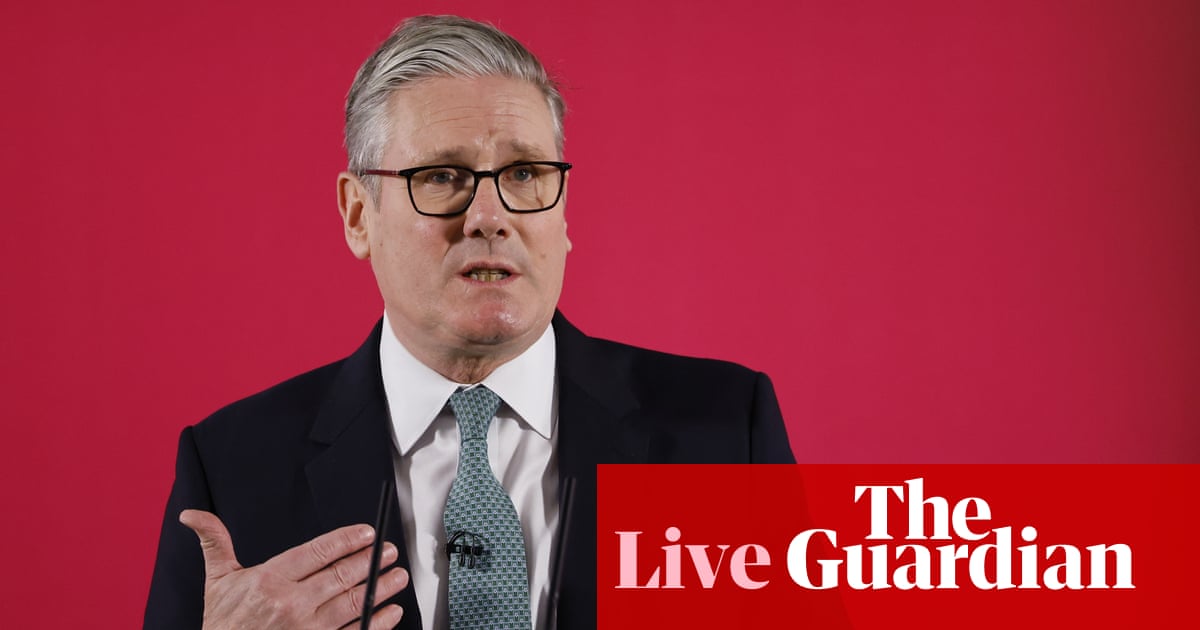
‘There was no misleading’ – Starmer defends Reeves against claims she was not honest about about pre-budget state of public finances
Q: [From Beth Rigby from Sky News] Reeves did mislead people because she told people about the productivity downgrade without telling people that other revenues offset that. A cabinet minister told me this morning they felt misled.
Starmer does not accept that. He says:
Look, there was no misleading, and I simply don’t accept. And I was receiving the numbers.
He says, because of the productivity review, the government had £16bn less than it otherwise would have done.
That review had not been done for 15 years, he says.
He says:
Starting that exercise with £16bn less than we might otherwise have had – of course, there were other figures in this, but there’s no pretending that that’s a good starting point …
To suggest that a government that is saying that’s not a good starting point is misleading is wrong in my view.
Key events
Starmer declines to say if he expects welfare spending to be falling by time of next election
Q: To return to the question Chris Mason asked (see 10.52am), do you want to see welfare spending falling by the time of the next election?
Starmer said he has two reviews looking at welfare spending. The last government “lost control of welfare spending”, he said.
He defended getting rid of the two-child benefit cap. And he said he was struck, visiting a hospital last week, how staff linked poor child health explicitly to poverty.
But he did not say whether or not he wanted overall welfare spending to be falling by the time of the next election.
(At the time of the proposed welfare reforms that had to be abandoned in the summer, ministers were not saying they would lead to spending on benefits falling by the time of the next election. But they did say the reforms would stop spending rising as much as it would without them.)
Q: Are you confidence Labour MPs will support welfare reform?
Starmer said that he saw this was a moral question. He repeated his point about being worried about young people being excluded for good from the workplace.
Starmer claims to be ‘supportive’ of OBR, but says it should have published productivity review at end of last parliament
Q: You are clearly very angry with the OBR over the timing of its productivity review. If it does not command your confidence, what is the point of the OBR?
Starmer denies being “angry”.
He says it is a good thing that reviews like this are carried out.
But he says it would have been better if that has been carried out at the end of the last parliament. He says he feels as if he has been “picking up the tab for the last government’s failure”.
He says he is “very supportive” of the OBR.
But he says the release of the budget document by mistake was “a massive discourtesy to parliament”.
Starmer declines to defend OBR’s decision to publish on Friday its pre-budget advice to Treasury
Q: Wasn’t it misleading for Reeves to talk about the productivity downgrade when she had been told she was heading for a budget surplus? And was it right for the OBR to reveal on Friday all its advice to the Treasury?
Starmer repeats his point about not accepting the Reeves was misleading.
And he says it is for Richard Hughes, the chair of the OBR, to explain why he published those figures.
Starmer questions why OBR chose to carry out productivity growth review when Labour came to power, not before
Q: [From Christopher Hope from GB News] How can our viewers trust anything that you say?
Starmer says the government started the budget process in a bad way. Having £16bn less than expected was “a very bad starting position”.
He queries why the OBR decided to review productivy growth when Labour came to power, when it had not done that earlier, but then suggests that is something he just has to accept.
Robert Peston, ITV’s political editor, goes next. He says he has covered budgets for 35 years and never known one this shambolic, apart from Liz Truss’s.
Starmer defends the budget. The NHS was on its knees when Labour came in, he says. And he says when he visited a hospital afterwards and said the government was cutting £150 off energy bills. Nurses clapped at that point, he says. He says he is proud of that.
Q: What are you going to do to improve links with the EU?
Starmer says he negotiated a reset deal with the EU. And he says a new SPS deal should cut food costs.
‘There was no misleading’ – Starmer defends Reeves against claims she was not honest about about pre-budget state of public finances
Q: [From Beth Rigby from Sky News] Reeves did mislead people because she told people about the productivity downgrade without telling people that other revenues offset that. A cabinet minister told me this morning they felt misled.
Starmer does not accept that. He says:
Look, there was no misleading, and I simply don’t accept. And I was receiving the numbers.
He says, because of the productivity review, the government had £16bn less than it otherwise would have done.
That review had not been done for 15 years, he says.
He says:
Starting that exercise with £16bn less than we might otherwise have had – of course, there were other figures in this, but there’s no pretending that that’s a good starting point …
To suggest that a government that is saying that’s not a good starting point is misleading is wrong in my view.
Starmer is now taking questions.
Q: [From the BBC’s Chris Mason] Was Rachel Reeves open about the state of the economy? And do you want welfare spending to fall?
Starmer says the productivity downgrade meant the Treasury needed to raise £16bn more than it would have done without that.
He says the government was always going to have to raise extra money.
At one point he thought they would have to breach the manifesto promise on tax.
He asks if there were alternatives. There were alternatives, and that did not need to happen.
On welfare, Starmer says is particularly concerned about young people who are not earning or learning. He says there a moral element to this.
Starmer then mentions the need for welfare reform. (See 9.28am.)
And he ends by saying it is necessary to admit that the Brexit trade deal has harmed the economy. He calls for closer economic ties with the EU.
Starmer says he wants to use the rest of his speech to talk about the next steps for economic renewal.
First, he turns to regulation – and mentions the report from the nuclear regulatory taskforce last week.
That mentioned “pointless gold plating, unnecessary red tape, well intentioned but fundamentally misguided environmental regulations” and said Britain awas the most expensive place in the world to build nuclear power.
He says he wants the government to cut this sort of regulation.
Starmer says he is confident UK can ‘beat the forecasts’ on growth
Starmer says the measures in the budget are not just about helping people with the cost of living; they are about giving people security too, he says.
On growth, he says:
When it comes to economic growth, better living standards, we’re confident we can beat the forecasts. We’ve already beaten them this year.
We are in control of our future. We’ve already struck trade deals. They’re attracting billions of pounds of investment. We’re removing barriers to business right across the economy in planning, industrial policy, pension reform, artificial intelligence, capital investment and right at the heart of the budget we have a package of measures to keep the green light for the world’s best entrepreneurs.
That is why the budget was good for growth, he says.
Starmer says Britain has now ‘walked through narrowest part of the tunnel’
Starmer says Labour had a difficult inheritance.
But if you’d said to me 17 months ago, on the first day of government, that by now we would have cut NHS waiting times, cut immigration, cut child poverty by a record amount, if you’d said to me that Britain would now be cutting borrowing faster than any other G7 country without cutting public investment, that our fiscal headroom is up significantly, economic growth is beating the forecast, with wages up more since the election than in a decade of the previous government …
If you’d said to me, because of all that, we can tackle the cost of living for working people, freezing rail fares, freezing prescription charges, freezing fuel duty, slashing childcare costs, driving down mortgages, taking £150 off your energy bills, £300 for poorer households – then I would say yes, that is a record to be proud of.
Starmer goes on:
Because we confronted reality, we took control of our future and Britain is now back on track.
But I’m also confident we have now walked through the narrowest part of the tunnel.
Starmer says Labour ruled out cutting spending or raising borrowing because those options have been ‘tested to destruction’
Starmer says at the budget the government could have borrowed more, or cut public services.
But those ideas have been “tested to destruction”, he says.
Starmer says he is ‘proud’ of budget, especially taking 500,000 children out of poverty
Keir Starmer is speaking now.
He says he remembers when he was growing up his family having the phone cut off because they could not pay the bill. So he is proud the budget took steps to cut child poverty, he says.
[Not being able to pay bills] is still the reality of Britain for far too many people.
So yes, I am proud. I’m proud we scrapped the two-child limit. I’m proud of lifting over half a million children out of poverty. Proud we raised the national minimum wage again. That is what a Labour government is for – making life better for working families.
Q: Reform would review the triple lock. Would you?
Badenoch says the triple lock is Conservative policy. It does cost a lot, she says. But getting rid of it would not help growth, she says. She says you can get rid of it, “and we can all get poorer together”.
She says Reform UK don’t have serious policies.
The real problem with welfare is that not enough people are working, she says.