 By bizn_fun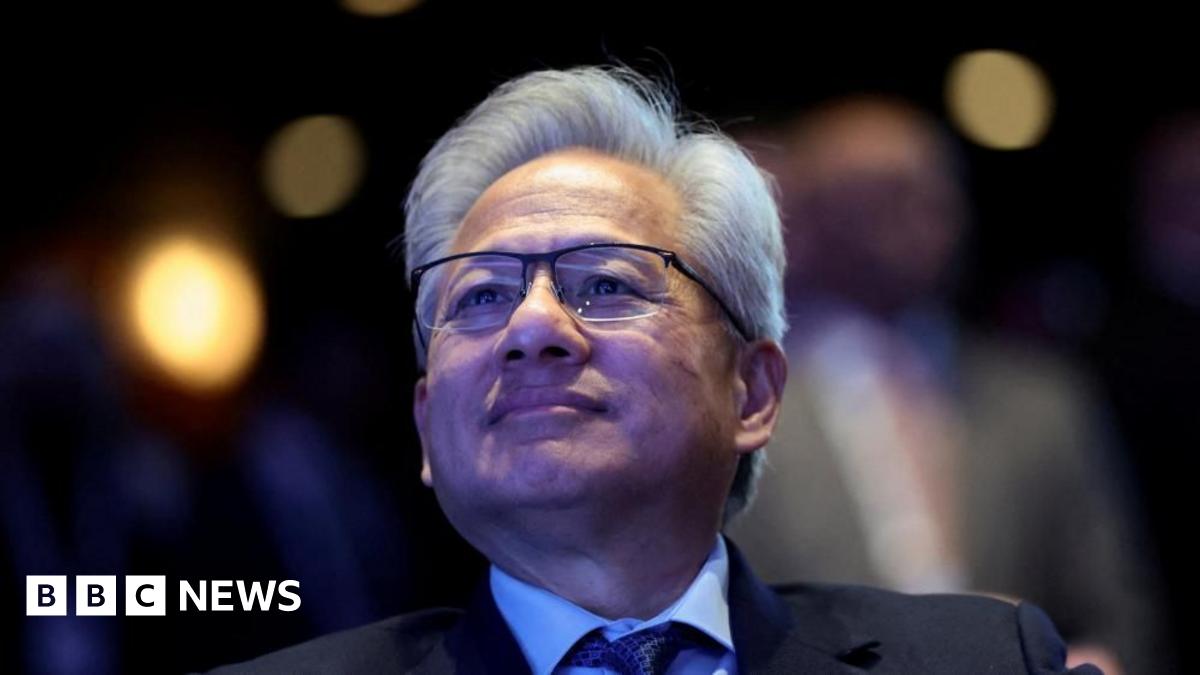
Wearing his trademark black leather jacket, Huang told an audience of hundreds that the project has taught Nvidia “an enormous amount” about how to help partners build robotic systems.
Analysts say the announcement reinforces Nvidia’s leadership in integrating AI hardware and software, deepening its push into physical AI.
“NVIDIA’s pivot toward AI at scale and AI systems as differentiators will help keep it way ahead of rivals,” said Paolo Pescatore, analyst at PP Foresight, from Las Vegas.
“Alpamayo represents a profound shift for NVIDIA, moving from being primarily a compute to a platform provider for physical AI ecosystems.”
Shares of the AI chip designer rose slightly in after-hours trading following Huang’s presentation.
It featured a video demonstration of the AI-powered Mercedes-Benz driving through San Francisco while a passenger, sat behind the steering wheel, kept their hands in their lap.
“It drives so naturally because it learned directly from human demonstrators,” Huang said, “but in every single scenario… it tells you what it’s going to do, and it reasons about what it’s about to do.”
Alpamayo is an open-source AI model, with the underlying code now available on machine learning platform Hugging Face, where autonomous vehicle researchers can access it for free and retrain the model, Huang said.
“Our vision is that someday, every single car, every single truck, will be autonomous,” he told the audience.
The company also has plans to launch a robotaxi service by next year in collaboration with a partner, but has declined to name the partner or say where it will be.