 By bizn_fun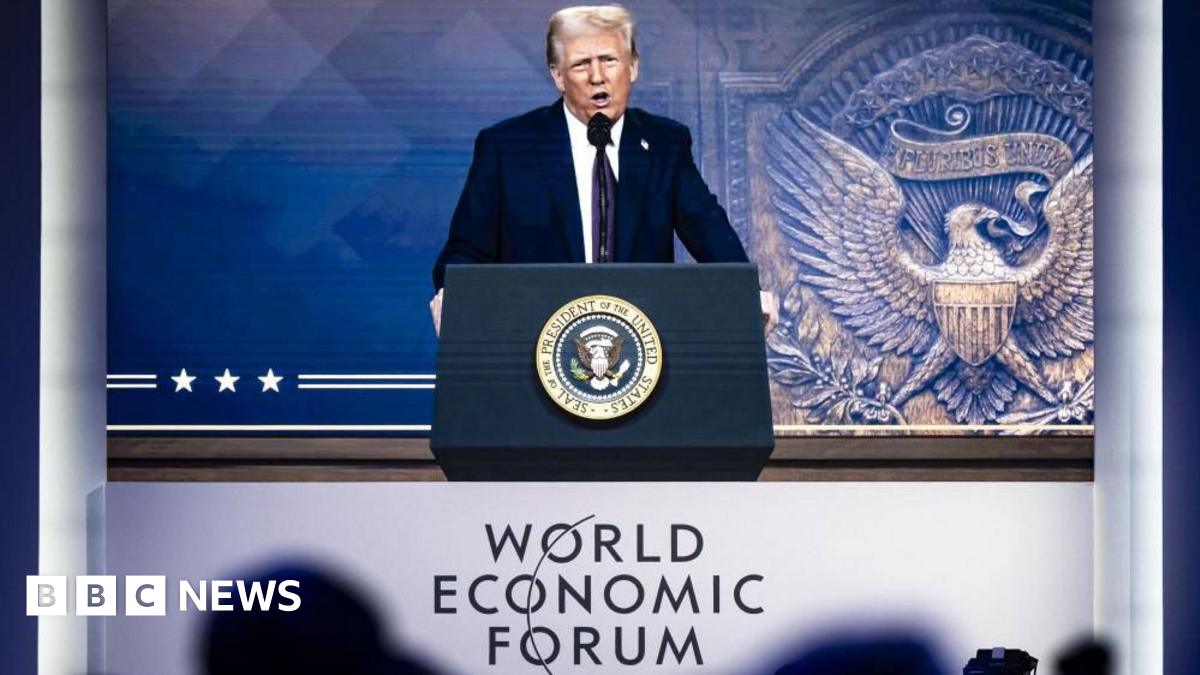
Most of the G7 leaders are coming, as will Ukrainian President Zelensky, along with 65 other heads of state and government and 850 of the world’s top bosses, and dozens more tech pioneers.
Trump himself will be arriving in the Swiss alps with five cabinet members, a massive entourage of administration officials, and the US business elite from Nvidia’s Jensen Huang to Microsoft’s Satya Nadella.
But this is not friendly home territory for the US president. His coded hints about obtaining or even invading Greenland will not go down well with a European audience.
Instead it will be Canadian Prime Minister Mark Carney, who will represent the vision of North America that Europe would love to will into existence. Carney has ridden out the best part of a year of US trade chaos with a growing economy, having replaced the US with other trade partners and was recently spotted proclaiming a new world order protecting multilateralism with Xi Jinping in China.
The Chinese themselves will be present at finance minister level, offering up their country – the world’s second largest economy and now largest car exporter – as the world’s grown ups. It is a place where every year they seem to tap their watches and wait for their slow economic, technological and geopolitical ascent.
After all, let’s not forget the lessons of last year’s Davos, where the US triumphalism on display on the Tuesday had been utterly superseded by the end of the week with news about a strange Chinese AI chatbot called DeepSeek.
It was at Davos a decade ago that I was first told about a quantum computer.
Then, last year at a session on car batteries I came away convinced that US and European car manufacturers had no chance of catching the Chinese technology this decade.
Many people rail against Davos. But it will be worth tuning in: the future can be found in some of its most brightly branded corners.