 By bizn_fun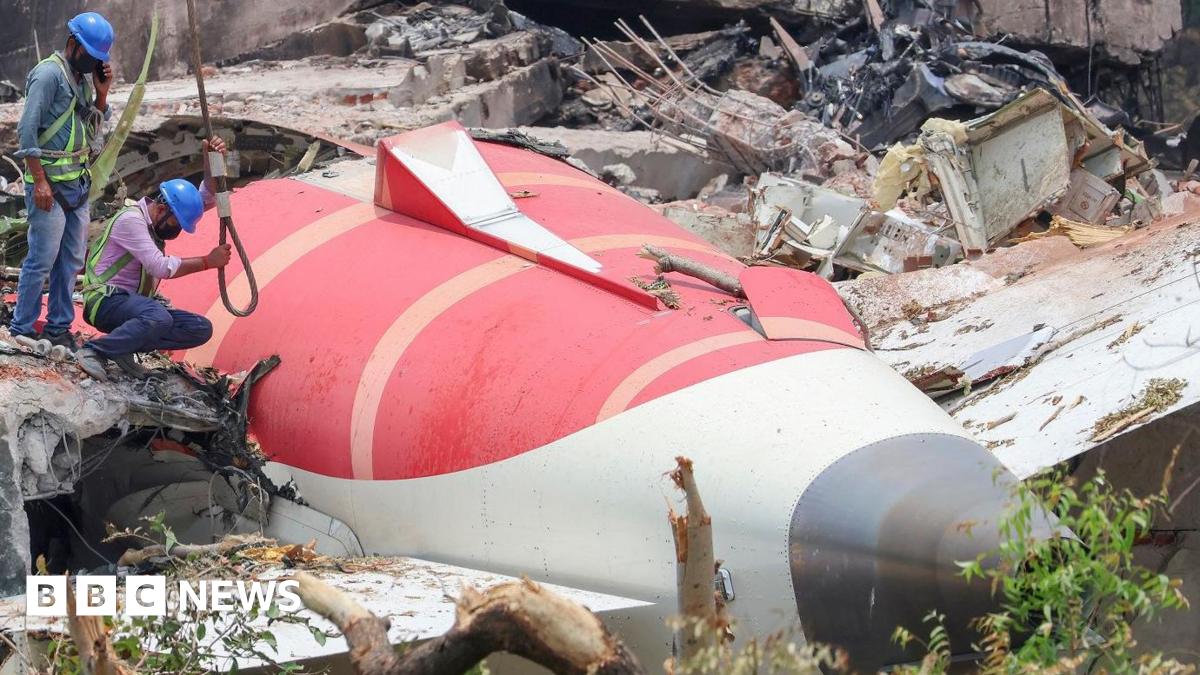
The Foundation’s report has been sent to the US Senate Permanent Subcommittee on Investigations, which last year held hearings into “Boeing’s broken safety culture”.
The official investigation into the Ahmedabad crash is being carried out by India’s Aircraft Accident Investigation Bureau (AAIB). American officials have also been taking part, as the aircraft and its engines were designed and built in the US.
A month after the accident, the AAIB published a preliminary report., external This is standard practice in accident investigations, and is meant to provide a summary of the known facts at the time of publication. It will not usually draw firm conclusions.
However, a short section of this 15-page report generated significant controversy.
It states that moments after take-off, the plane’s fuel control switches, which are normally used when starting the engines before a flight and shutting them down afterwards, had been moved from the “run” to the “cut-off” position.
This would have deprived the engines of fuel, causing them to lose thrust rapidly. The switches were moved back to restart the engines, but too late to prevent the disaster.
The report then says: “In the cockpit voice recording, one of the pilots is heard asking the other why did he cut-off. The other pilot responded that he did not do so.” The actual transcript is not provided.
That indirectly reported conversation prompted a number of commentators in the US and India to suggest that the accident had been caused by one of the pilots, either deliberately or inadvertently.
But there has since been a backlash from lawyers for the accident victims, safety campaigners, a pilots’ association and some technical experts in India and the US. They believe the focus on the pilots is misleading, and has diverted attention away from the possibility of a technical problem with the aircraft.
Since the report was issued, the BBC has spoken to a range of people within the industry, including pilots, accident investigators and engineers. While theories about what actually happened vary widely, there is a broad acknowledgement that important information is missing.
The Foundation for Aviation Safety is an organisation led by Ed Pierson, a former senior manager at Boeing’s Renton factory in Seattle, who has been an outspoken critic of the aerospace giant’s safety and quality control standards for years.
He has previously described the preliminary report into the Air India crash as “woefully inadequate… embarrassingly inadequate”.
The Foundation says its concerns about the 787 go beyond the aircraft involved in that accident. It says it has also examined some 2,000 reports of failures on hundreds of other aircraft in the US, Canada and Australia.
They include water leaks into wiring bays, which have previously been noted by US regulator the Federal Aviation Authority. Concerns about the aircraft have also been voiced in some other quarters.
Boeing has always maintained that the 787 is a safe aircraft with a strong record. Prior to the Ahmedabad crash, it had operated for nearly a decade and a half without a single fatality.
The BBC has not seen the documents referred to in the Foundation’s report.
Boeing declined to comment, as the investigation into the Air India crash is still ongoing. It referred queries about the crash to the AAIB.
Air India and the AAIB have been approached for comment.