 By bizn_fun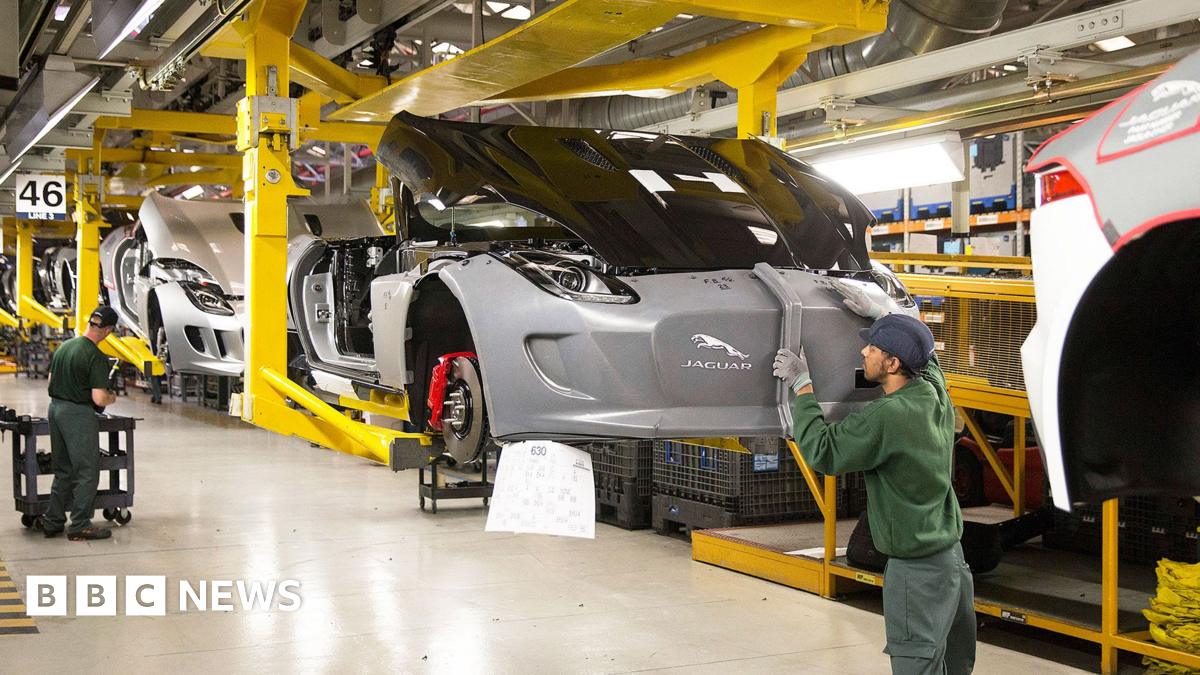
With roughly 78% of the cars built in the UK destined for export, the industry is also vulnerable to trade disruption. US President Donald Trump’s sudden announcement in April of import taxes, or tariffs, on cars sent to America prompted some manufacturers to limit shipments there.
Ultimately, a deal was done which removed the threat of very high levies. But the basic tariff on UK cars exported to the US still increased from 2.5% to 10%, and had a dampening effect on sales.
A further factor that limited car production last year was the earlier decision by Nissan and JLR to end production of ageing models while preparing their factories to produce a new generation of electric vehicles.
The latest version of Nissan’s electric Leaf began rolling out of its factory in Sunderland in mid-December, while JLR’s new electric Range Rover and the first of a new generation of electric Jaguars are due to emerge from its Solihull plant later this year.
Output of commercial vehicles, meanwhile, fell 62% last year to just 47,344. The bulk of the decline was caused by the closure of Vauxhall’s plant in Luton, which shut its doors for good in late March. Parent company Stellantis is consolidating its UK van production at its Ellesmere Port factory in Cheshire.
The SMMT believes this year will be better, with car output expected to rise by 10% as production of new models ramps up. According to Hawes, there is a “pathway” to increasing output of cars and vans to more than 1 million per year by 2027.
This “optimisitic but realistic” target would rely on the introduction of more new models, he said, as well as a recovery in demand in key export markets, especially in Europe.
It would also require the government to implement key parts of its Modern Industrial Strategy, notably measures to drive down what the SMMT describes as the UK’s stubbornly high cost of energy.
The government’s own target is more ambitious. It wants the UK to produce 1.3 million vehicles a year by 2035. For that to happen, according to Hawes, a new manufacturer would need to set up a factory in the UK – with a Chinese firm the most likely target.
“In terms of who is expanding their production globally, obviously it’s the Chinese,” he said.
However, the UK industry is also facing threats which could significantly harm future production.
Hawes expressed deep concern about what he called a shift towards a ‘Made in Europe’ approach from the EU authorities. This included plans to restrict government subsidies for low emission vehicles to those built in Europe, as well as measures forcing corporate fleets to favour European-made cars.
“Unless the UK can be seen as part of that, these proposals could have the effect of delivering what Brexit didn’t deliver – and that’s making it much harder for UK produced vehicles to access the European market,” he said. “So this is a significant threat.”
He also pointed to tougher European Union ‘rules of origin, external‘ measures which are due to come into force in January next year. These will significantly increase the amount of parts and components produced in the EU or the UK that needs to be included in electric vehicles exported in either direction, if they are to be exempted from steep tariffs imposed at the border.
However, many EVs being transported across the channel still do not meet these requirements. This is largely because battery-building capacity in the UK and Europe has not grown as quickly as was expected when the rules were drawn up. Hawes said he was hoping an agreement could be reached during the year, in order to give manufacturers more time to comply.