 By bizn_fun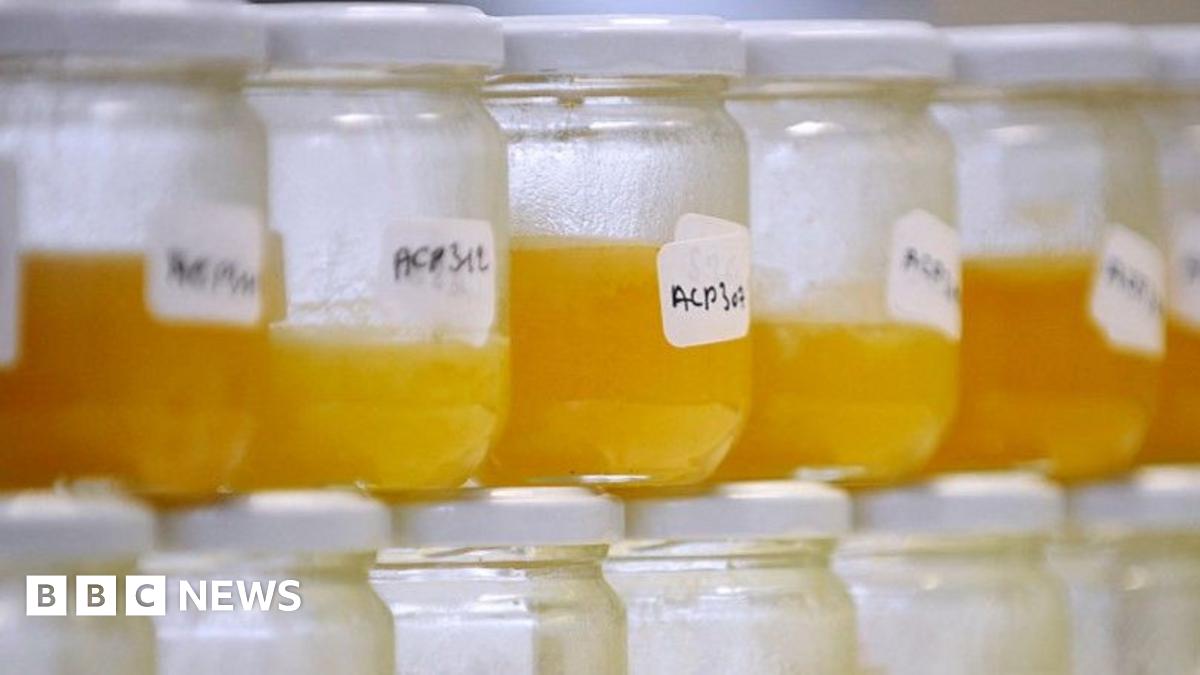
Food crime mostly goes unreported, so it’s difficult to grasp its scale.
It can include diluting or substituting ingredients, altering documents, or going through unapproved processes.
One 2025 estimate, external is that food crime costs the global economy around £81bn ($110bn) a year.
Fraudsters tend to target commonly consumed foods, like dairy, and high-value foods, like olive oil.
Along with alcohol, seafood and edible oils, honey is frequently among the most common foods that are faked.
Plant-based syrup, such as glucose syrup derived from sugar cane, can be half the price of genuine honey, or even less.
In addition to keeping five beehives, Dr Juraj Majtán heads a lab studying bees and bee products at the Institute of Molecular Biology, part of the Slovak Academy of Sciences.
He understands well just how biologically complex honey is. It contains hundreds of compounds, and there are many diverse types and sources of honey.
One result is that it’s challenging to detect whether the honey in a jar genuinely comes from honeybees from a particular place, or has been mixed with syrup derived from rice, wheat, corn or sugar beets.
There isn’t even an internationally agreed definition of honey.
While fake honey is sometimes runnier and weaker-tasting than genuine honey, sophisticated fakes can look, smell and taste just like the real thing. Inauthentic honey can also fool chemical analysis, because the sugar levels are so similar.
There are a variety of methods to test for suspicious honey.
Some analyse chemical bonds to compare them against genuine honey samples. Others analyse isotopes to determine where a product likely originated.
But “currently there is no single method…that can say that this honey is fake honey,” Dr Majtán explains. He says that we desperately need new methods.