 By bizn_fun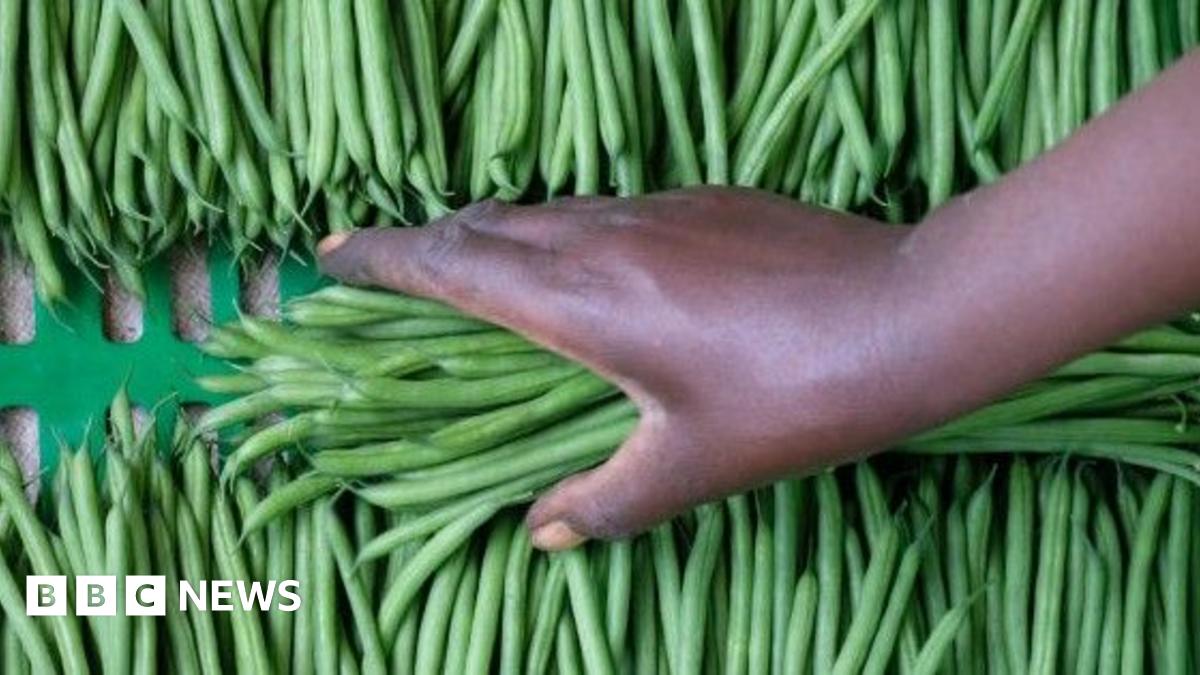
Diarra is one of 9,000 employees, mostly women, working on two British-run farms in Senegal’s Saint-Louis region.
Between January and March, if you browse the fresh produce aisles of the UK’s biggest food retailers, including Tesco, Sainsbury’s, Asda, Aldi and Lidl, you’re likely to see spring onions, radishes, green beans, chillis, butternut squash, and cobs of corn, all labelled Produce of Senegal.
The hot climate and sandy, parched soil make this an unlikely place for fruit and vegetables – or so you might think.
And yet, it’s from here, at the edge of the desert, two of the UK’s biggest fresh produce businesses – G’s Fresh and Barfoots – are growing an increasing amount of food.
The origins of the farms go back to the early 2000s. Back then, French entrepreneur and agronomist Michael Laurent began using Google Earth to identify new locations for food production.
Saint-Louis, he realised, has an abundance of sunlight, land and labour. And, although there is little rainfall, the 1,600km (1,000-mile) long Senegal River forms its northern border with the neighbouring country of Mauritania, before emptying into the Atlantic.
Some of this river water is diverted into a maze of canals. A network of pumps and pipes then distributes the water across miles of arid land to irrigate the farms that have helped to green the desert.
“There was nothing here when we started,” says Laurent. “It was all bush.” Now the farms cover 2,000 hectares of the land, the equivalent of almost 3,000 football pitches.